
Quick Summary: AI search shapes how cannabis customers research products, while Google still drives how they find a dispensary. Twelve months of GA4 data from several established dispensary sites show 4.97 million organic search sessions versus 2,946 from all AI assistants, about 1,688 to 1. Over six months, organic search generated $8.58 million in online pickup orders, and AI generated $1,308. Google treats generative AI optimization as SEO, so AI visibility starts with a strong Google Business Profile, a crawlable website, consistent brand information, and helpful content.
In this article:
- Why every dispensary is asking about ChatGPT
- Is AI search changing how people find dispensaries?
- The “dispensary near me” reality check
- GEO vs. SEO (and AEO): is it a different game?
- Why some dispensaries get mentioned by AI tools
- What Google says works vs. what LinkedIn says
- How to measure AI visibility
- Where to focus first with a limited budget
- FAQ
- The takeaway
- Data and methodology
Why Every Dispensary Is Asking, “Are We on ChatGPT Yet?”
“Are we showing up on ChatGPT yet?”
If you own or market a dispensary, you have probably asked that question in the last year. I hear it on almost every sales call now, usually just a few minutes in, right after the pleasantries and right before anyone says the word “budget.”
I get it. AI search is the loudest conversation in marketing right now, and it deserves to be loud. It is changing how people research products, compare options, and learn. But there is a version of that conversation that has drifted away from the facts, and it goes something like this: “SEO is dead, Google is over, and if your dispensary is not ‘optimized for AI’ by next quarter you might as well board up the windows.”
I have been in the SEO space for more than 13 years, and in that time I have watched at least five things that were supposed to be “the end of SEO.” Mobile was going to ruin it. Voice search was going to ruin it. Social, Amazon, and TikTok all took a swing. And yet, here we are. SEO is doing fine. It just keeps changing its clothes.
So here is the data-backed version of where things stand for cannabis brands in 2026 and going into 2027. It’s not some tired LinkedIn hot take requiring you to comment “tell me more” for an “exclusive report on AI visibility” (*rolls eyes*).
Instead, this is the perspective built from the Search Console, Analytics and Google Business Profile data of the dispensaries we work with every single day.
Main Street vs. the New Highway: A Better Way to Think About AI Search
Think about it this way: imagine that your city officials announce a new highway a few miles from your store on Main Street. It’s going to be a massive project, and everyone in town is talking about it. A consultant advises you to remove the billboards you have on Main Street, and instead, put up a billboard facing the new road before the pavement has even dried. Meanwhile, hundreds or even thousands of people are still driving down Main Street every month looking for a dispensary.
The new highway is real, and you should absolutely have a sign on it. But you also keep the visibility on Main Street, because that is where the customers are now and what will eventually feed into the new highway.
My thoughts below are a longer-winded version of this scenario, but in terms of organic search and AI visibility.
Is AI Search Actually Changing How People Find Dispensaries?
Yes and no, and the “no” part is the one nobody is trying to sell you.
Yes, on the research side. Hundreds of millions of people use LLMs like ChatGPT and Claude every week. Google now attaches an AI Overview to a large share of searches, and on our own agency site roughly eight out of 10 keywords we rank for have an AI Overview sitting above the results. People genuinely use these tools to ask things like what a 2:1 CBD gummy will feel like, whether a sativa is a bad idea before a work call, or how a live rosin cart differs from distillate. Product research and education have moved, and cannabis product brands in particular should care about being the source those answers cite.
No, on the trip to the store. Cannabis dispensaries are a physical retail business. Outside of the markets where delivery is legal and available, someone has to walk into your dispensary, show an ID and pick up the order. And the question that comes right before a customer makes that trip to a dispensary is not a paragraph long. It is simply: “dispensary near me.” That question still lives on Google, and more specifically in the Google map pack, which is exactly where an AI-written answer does not appear.
There is a cannabis-specific wrinkle here too. Even firms that sell AI visibility audits have found that AI engines hedge, add disclaimers or flat-out refuse to answer roughly 28% of cannabis shopping questions, a higher rate than any other consumer category they track. When a customer asks which dispensary to visit and the assistant politely declines to say, Google Maps gets the next tap.
What 12 Months of Dispensary Traffic Data Shows
I pulled 12 months of GA4 data across several well-established dispensary clients throughout the country to see where their website sessions actually came from. Every AI assistant combined, meaning ChatGPT, Perplexity, Gemini and Copilot, accounted for 2,946 of 9.2M sessions. Organic search alone delivered 4.97M.
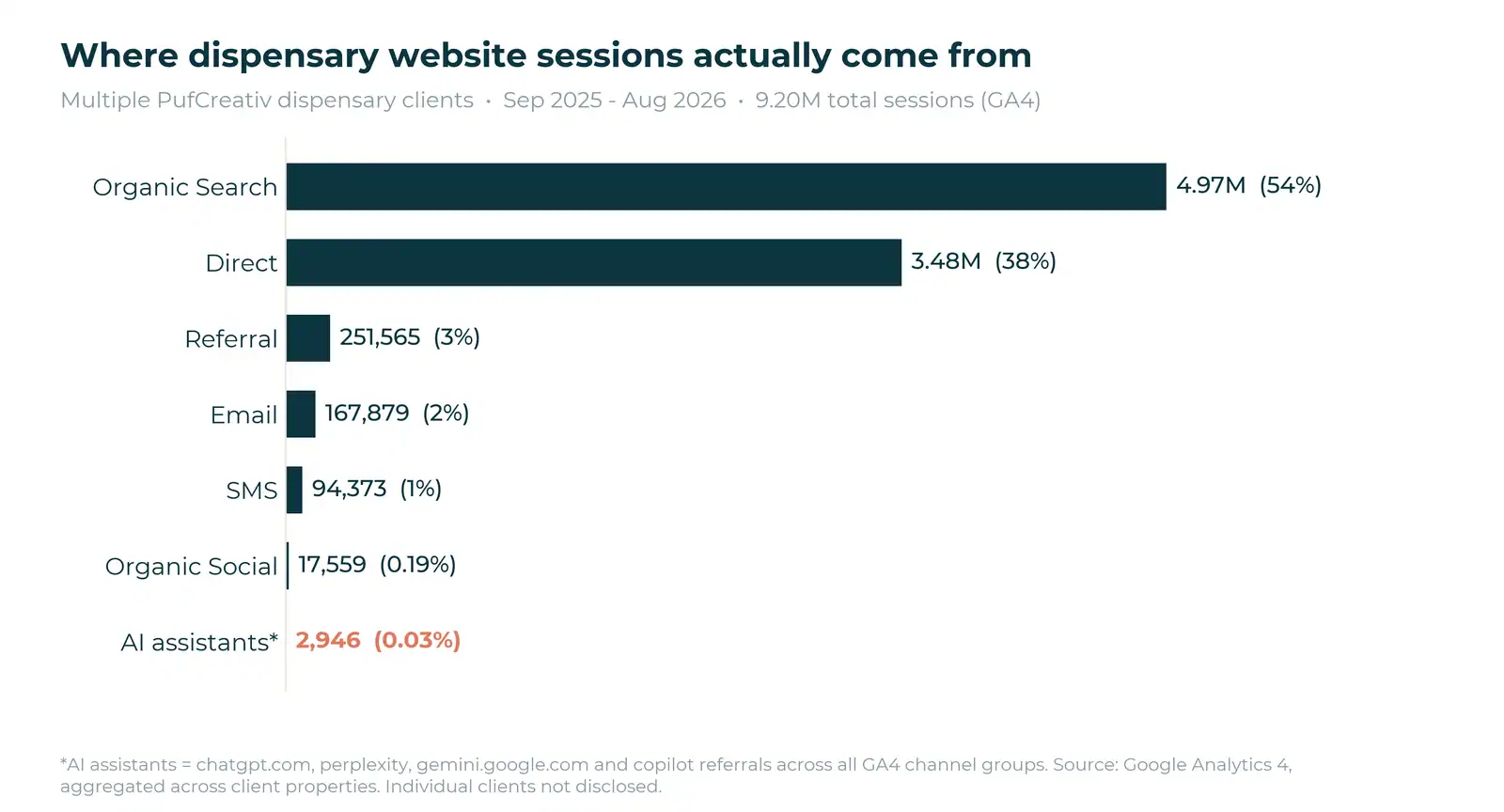
Figure 1. Website sessions by channel across multiple PufCreativ dispensary clients, Sep 2025 through Aug 2026 (GA4).
Before anyone reads that chart as “AI cannot find these brands,” let me be clear about what it shows. These dispensaries get mentioned in AI answers, and we track those mentions every month. What the answers do not do (at least yet) is push meaningful numbers of customers through a front door. That is not a brand problem. It is how the platforms behave. When Pew Research studied real Google users, people clicked a link inside an AI summary about 1% of the time. The answer box is a place people read. It is not yet a place they leave.
| THE NUMBER THAT FRAMES EVERYTHING ELSE |
|---|
| Across multiple dispensary websites and twelve months of data, organic search sent about 1,688 sessions for every one session from an AI assistant. AI answers are where cannabis customers learn. Google is still where they go when they are ready to drive. |
AI Referral Traffic Is Small, but It’s Growing
Here’s the part where skeptics get it wrong. That AI slice is growing, and we would be doing you a disservice to pretend otherwise.
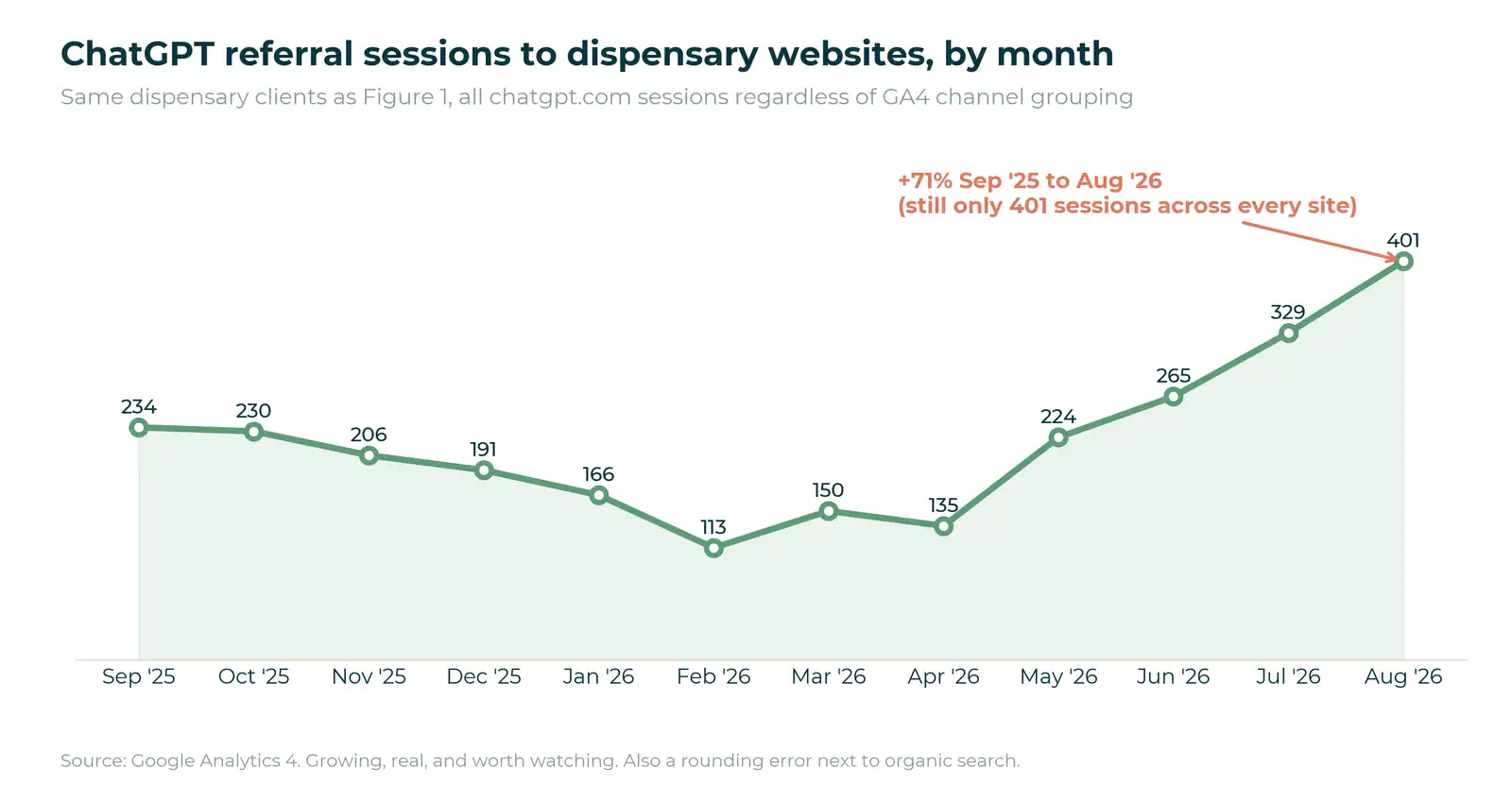
Figure 2. Monthly ChatGPT referral sessions
ChatGPT referrals to these sites climbed 71% between September 2025 and August 2026, with a noticeable acceleration during the summer of 2026. We watch that line every month, and we build for it. We also keep it in perspective: 401 sessions spread across multiple busy dispensaries would fit inside a single store’s Tuesday afternoon foot traffic.
In other words, AI traffic is real and it is rising… but it is still a rounding error next to the map pack.
The “Dispensary Near Me” Reality Check
If you want to understand why organic search still dominates for dispensaries, look at how customers actually phrase their search when they’re ready to make a purchase. Google Business Profile lets us see the exact search terms that surfaced a listing. So we looked at dozens of dispensary profiles over the same 12 months.
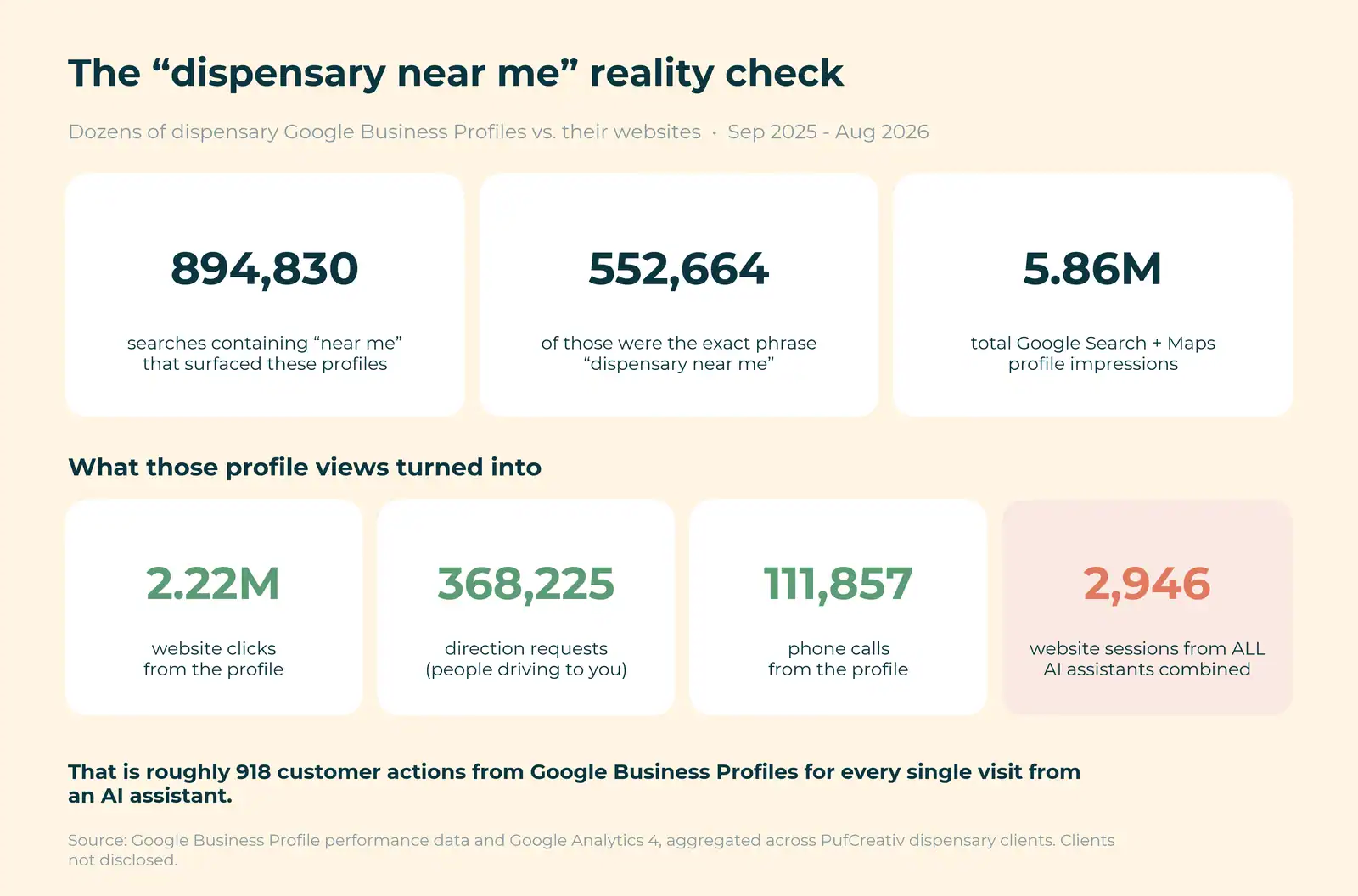
Figure 3. Google Business Profile demand and actions across dozens of dispensary locations, compared with website sessions from all AI assistants.
Of those searches, 894,830 contained the words “near me,” and 552,664 were the exact phrase “dispensary near me.” Those Google Business Profiles produced 2.22M website clicks, 368,225 requests for driving directions and 111,857 phone calls. Every one of those is a person with intent, willing to visit a dispensary, and ready to make a purchase.
Why AI Overviews Rarely Appear for Local Dispensary Searches
There is a structural reason AI answers rarely show up for searches like that. Google does not typically render an AI Overview for a short, local, transactional query. Pew found that only 8% of one- or two-word searches triggered an AI summary, versus 53% of searches 10 words or longer. “Dispensary near me” gets a map, three pins, hours, a star rating and a Directions button. That is the highest-intent real estate in cannabis marketing, and it is won with a verified, complete, actively managed Business Profile, plus a website Google trusts to back it up. If you want a checklist of the things that quietly break that setup, our team wrote up the most common dispensary SEO mistakes that cost you customers.
Organic Search vs. AI Assistants: The Revenue Comparison
And for the folks who find the term “sessions” a little abstract, here is the same story in dollars. I sampled a handful of those clients who track online pickup orders in GA4. Over the last six months, organic search produced $8.58 million in online orders (135,012 of them). Every AI assistant combined produced $1,308 from 17 orders.
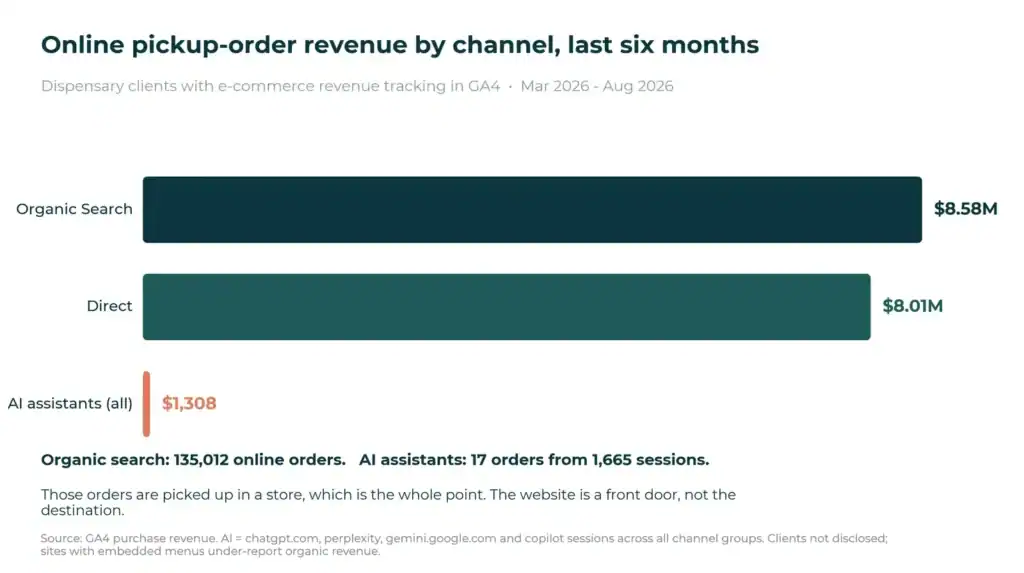
Figure 4. Online pickup-order revenue by channel, sample of dispensary clients with e-commerce tracking, Mar through Aug 2026 (GA4).
Those orders get picked up in a store. The website is the front door, not the destination, and for now, the door that customers keep walking through is the one Google holds open.
“People typically don’t ask ChatGPT where the closest dispensary is while sitting in a parking lot before heading home after work. They ask Google. Build for the parking lot first, then build for everything else.”
Grady Moore, Director of SEO, PufCreativ
GEO vs. SEO: Is AI Visibility Really a Different Game?
Generative engine optimization, answer engine optimization, LLM optimization. The acronyms seem to be multiplying faster than the evidence these days. So let me give you the least exciting and most useful answer in this article: AI visibility is not a separate game. It is the same game with a new scoreboard, and the scoreboard still reads your SEO.
That isn’t a “just trust me bro” statement. In May 2026, Google published its first official guide to optimizing for generative AI features in Search. Its position is that optimizing for generative AI search “is optimizing for the search experience, and thus still SEO.”
GEO vs. AEO vs. SEO: What Is the Difference?
You will see three acronyms used almost interchangeably. SEO (search engine optimization) is the umbrella: making a site crawlable, relevant and trusted so it earns visibility in search. AEO (answer engine optimization) focuses on being the direct answer, whether that is a featured snippet, a voice result or an AI-generated response. GEO (generative engine optimization) focuses on being cited or mentioned inside AI-generated answers from tools like AI Overviews, ChatGPT and Perplexity. For Google’s own AI features, Google is clear that all of it is still SEO. The practical difference is emphasis, not a separate rulebook.
| Approach | What it means in practice |
|---|---|
| SEO | Goal: rank and earn clicks. Shows up in: organic results and the map pack. Runs on: crawlability, relevance and authority. Measured with: Search Console and GA4. |
| AEO | Goal: be the direct answer. Shows up in: featured snippets, voice results and AI answers. Runs on: clear, well-structured answers on pages that already rank. Measured with: Search Console and SERP features. |
| GEO | Goal: be cited or mentioned in AI answers. Shows up in: AI Overviews, AI Mode, ChatGPT, Perplexity and Gemini. Runs on: pages that already rank plus consistent brand facts across the web. Measured with: the Search Console generative AI report, GA4 referrals and prompt sampling. |
How AI Overviews and ChatGPT Choose Their Sources
As much as the overnight AI gurus may feel otherwise, the reason for this is mechanical, not philosophical. AI Overviews and AI Mode are built on Google’s core ranking and quality systems. They retrieve pages from the same index, using a technique Google calls retrieval-augmented generation (RAG), also known as grounding, and then write an answer from what they retrieve.
If a page cannot rank for a normal query, it is not in the pile the AI gets to summarize. ChatGPT with search browsing works on the same principle with a different index. No ranking, no retrieval. No retrieval, no citation.
| FROM THE SOURCE |
|---|
Google, in its own documentation: “our generative AI features on Google Search are rooted in our core Search ranking and quality systems.” Translation for dispensary owners: the fundamentals did not get replaced. They got promoted. |
Why Brand Consistency Matters More in AI Answers
What is different about AI answers is the weight they put on consensus. A search engine can rank a single well-built page. An AI assistant summarizes what the whole internet seems to agree about your brand. Your Business Profile, your Weedmaps and Leafly listings, your reviews, local press, your own site and even Reddit threads all get blended into a description of your brand. When those sources disagree about your hours, your address, or what you actually sell, the model hedges or skips you. When they agree, you get mentioned. That is why we treat AI visibility as the top layer of a stack, not a separate stack.
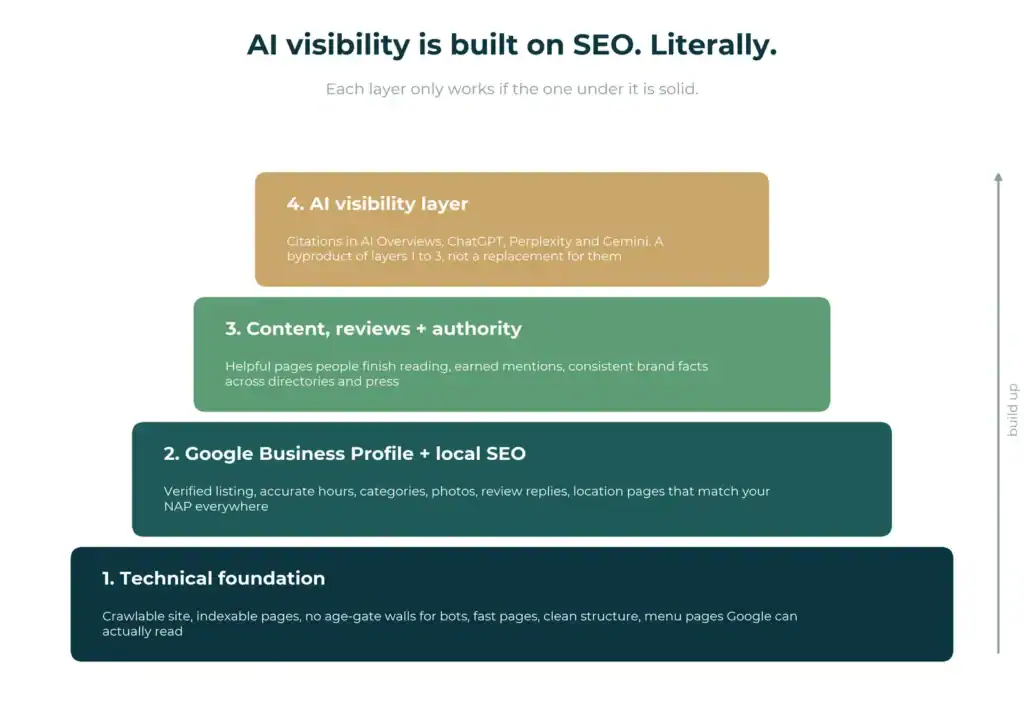
Figure 5. The four layers of organic visibility. AI citations are a byproduct of the three layers underneath them.
This is also why our team’s work in newer markets looks so familiar. Whether it is a Michigan dispensary or a cannabis brand in Germany, the path to being cited by an AI assistant runs directly through being found by a search engine.
Why Some Dispensaries Get Mentioned by AI Tools and Others Don’t
When a prospect tells us a competitor “shows up in ChatGPT” and they do not, the cause is almost never an AI-specific trick. It is usually one of these, and most of them are cannabis-specific problems the general marketing world never has to think about:
- An age gate that blocks crawlers. Compliance requires the gate for humans. It should never be a wall for Googlebot or AI crawlers. If bots cannot get past “Are you 21?”, neither can your visibility.
- A menu nobody can index. Embedded menu iframes and subdomains often keep your actual products, prices and strain names out of the search index entirely. AI can’t recommend what it has never read.
- Inconsistent brand facts. Different hours on Google than on Weedmaps, a legacy address on Leafly, three variations of your business name. Machines read disagreement as uncertainty, and uncertainty gets you left out of the answer.
- Thin location pages. A page that says “Welcome to our Lansing store” and nothing else gives neither Google nor a language model anything to cite.
- No reviews, or no replies. Review volume, recency and your responses are visible signals of a real, operating business. AI systems lean on them heavily when describing local retailers.
- Not much worth quoting. Helpful, original content about your products, your market, and your customers’ actual questions gets retrieved and paraphrased. Recycled strain descriptions do not.
- Blocking AI crawlers by accident. Lately, I’m seeing more and more sites with robots.txt directives that keep AI user agents out entirely, usually left over from a plugin default. It is worth a five-minute check.
Notice that every item on that list is an SEO item. Fix them, and you improve your rankings, your map pack presence, and your odds of being cited by an AI in the same motion.
That is the efficiency of building on the foundation instead of beside it. Our guide to designing a high-converting cannabis website covers several of these in more detail.
What Google Says Works vs. What LinkedIn Says Works
Here is where I want you to be a little skeptical, even of me. Throughout 2026 so far, the AI visibility conversation has produced a whole catalog of tactics that sound technical enough to be true. Google has now addressed most of them directly, and the gap between the average pitch deck and the documentation is pretty wide.
| What the typical LinkedIn feed claims | What Google actually published |
|---|---|
| Add an llms.txt file so AI models can “read” your site. | Not needed. Google says you do not need special machine-readable files, markup or Markdown to appear in generative AI features. |
| You need special AI schema or “chunked” content. | No AI-specific structured data is required. Standard SEO best practices and well-organized pages are what the systems use. |
| Rewrite your content “for LLMs.” | Write original, helpful, people-first content. The AI features rely on the same quality systems as regular search. |
| Buy an AI visibility score and optimize toward it. | Third-party tools do not have access to Google’s internal ranking data. Check any recommendation against official guidance before acting on it. |
| Buy mentions so AI systems talk about you. | Seeking inauthentic mentions can be treated as spam, the same way manipulative links are. |
Does Your Dispensary Need an llms.txt File?
Take llms.txt, the most talked-about file of the last eighteen months. Google’s John Mueller has said that, as far as he knows, none of the AI services have said they use it, that server logs show their crawlers don’t even check for it, and that it is “comparable to the keywords meta tag”: a site owner’s claim about their own site, which any system worth its salt would verify by just reading the site. If you already have one, it is not hurting you. If someone is charging you to add one, it’s probably worth asking what else is on the invoice.
Should You Trust a Free AI Visibility Audit?
Then there are the “free AI visibility audits” landing in every dispensary owner’s inbox. In June 2026, Google added official guidance on third-party SEO tools, services, and advice, and it names AEO and GEO services specifically. The takeaway was that Google does not evaluate or endorse any third-party tool, none of them can see its ranking data, a proprietary score is a vendor’s model rather than a Google signal, and claims of being “approved by Google” should make you wary.
Google also updated its long-running advice on hiring an SEO to say that anyone offering AI optimization should be able to show their recommendations line up with the published guidance. That is a standard PufCreativ welcomes, because it is the standard we already operate on.
How to Use AI Visibility Tools Without Being Misled
To be fair to the tools, we use several of them. They are useful the way a weather forecast is useful: directional, worth checking, but not the thing you want to bet the farm on. A score that drops 12 points because a prompt got reworded is not a strategy signal… a customer who can’t find your hours is.
| A USEFUL TEST FOR ANY SEO OR AI PITCH |
|---|
| Good advice qualifies itself as opinion based on verifiable data and experience, or it cites the source. That is Google’s definition, and it is a pretty good filter for unsolicited advice that pops up on LinkedIn too. |
How to Measure AI Visibility Without Fooling Yourself
The most common question after “are we on ChatGPT” is “how would we even know?” It is a fair one, because the measurement is genuinely messier than something like a keyword rank tracker. Here is how we approach it, in order of how much we trust the data:
- Google Search Console’s generative AI performance report. Google now reports how your pages perform inside AI Overviews and AI Mode. It is first-party data from the source, which makes it the most trustworthy number on this list.
- GA4 referral data (read carefully). GA4 introduced an “AI Assistant” channel group, but in our client data ChatGPT visits still land in several different channel groups depending on how the link was tagged. If you only look at the AI channel, you undercount. We filter by source instead and reconcile it by hand.
- Revenue and orders by channel. The metric that pays the bills. Sessions are interesting but pickup orders are the point. We report both, side by side, so nobody has to guess what a citation is worth.
- Structured prompt sampling. A fixed set of the questions your customers actually ask (“best dispensary in [city] for edibles,” “where can I buy live rosin near [neighborhood]”), run on a schedule across ChatGPT, Claude, Perplexity, Gemini and AI Mode, logging whether you are named and who is named next to you. This gives you citation share over time, which is more stable than any single result.
- Branded search and direct traffic. People who learn about you in an AI answer often don’t click the citation. They search your name later, or type your URL. A rising branded-search line can often be a fingerprint that AI exposure leaves behind.
What we won’t do is hand you a single “AI visibility score” and call it a day. Anyone selling you certainty here is selling you the packaging, not the product.
Where Should a Dispensary Focus First With a Limited Budget?
Most dispensaries are not choosing between SEO and AI visibility. They are choosing what to do first with a real budget and a small team. Our answer, built from the numbers above rather than from a trend report, looks like this:
- Your Google Business Profile. Verified, complete, correct categories, fresh photos, hours that match reality, every review answered. This is one of the single highest-return assets in cannabis marketing and it is where “dispensary near me” gets decided.
- A technically sound website. Crawlable past the age gate, an indexable menu, fast pages, clean structure, one clear location page per store. This is the foundation both Google and every AI system stand on.
- Reviews, consistency and authority. Match your name, address, phone, and hours everywhere, earn and respond to reviews, and get mentioned by local press and directories that matter. A strong loyalty program helps here more than people expect, because repeat customers are your most reliable reviewers.
- Content that answers real questions. Not low-quality filler. Fewer, better pages that address what your customers ask before they visit. This is the layer AI systems quote from.
- The AI-specific layer. Monitoring citations, sampling prompts, tightening entity signals, keeping AI crawlers unblocked and adjusting as platforms change. Important, ongoing, and built on everything above it.
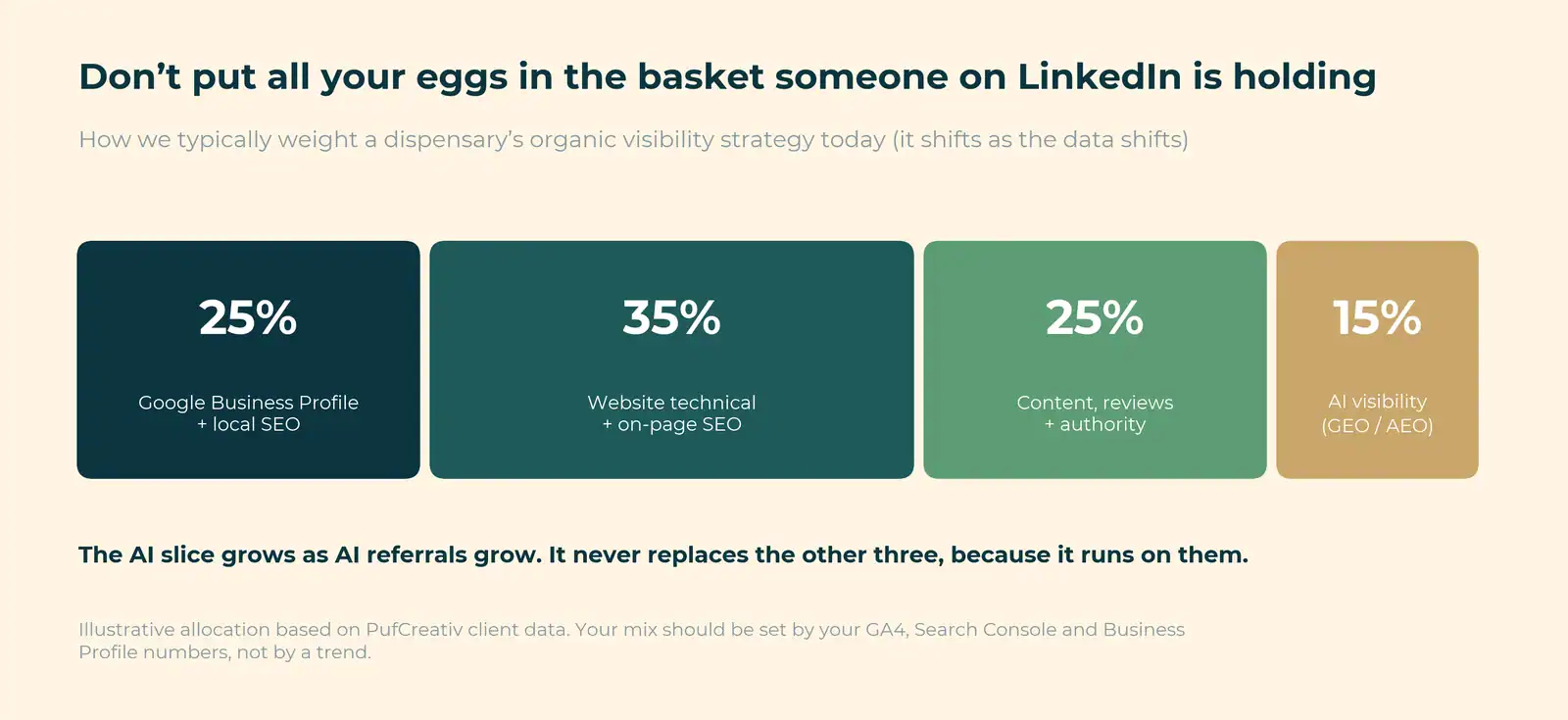
Figure 6. How we typically weigh a dispensary’s organic visibility work today. The mix moves as the data moves.
Is This a One-Time Fix or Ongoing Work?
Ongoing, without question. Google shipped multiple core updates this year, published brand-new AI documentation three times in one month, and changed how AI Overviews link out along the way. The platforms on the other side of the fence change even faster. Treating any of this as a one-and-done project is how a site ends up looking great in March and invisible by October.
Why Dispensaries Should Diversify Their Visibility Strategy
Which brings me to the eggs. Do not put all of yours in the basket someone on LinkedIn is holding. We do not tell clients to abandon Google for AI any more than we told them to abandon their website for Instagram in 2018. We spread the eggs deliberately across your Google Business Profile, website, content, authority and AI visibility, so that when the SEO or AI game changes overnight (which feels like a daily occurrence at this point), your brand has padding, preparation and a safety net.
Here’s something I tend to lead with in every proposal: nobody knows what AI search will look like in three years. Not Google, not OpenAI, not Anthropic, and certainly not the people posting crystal-ball prediction threads on social media.
PufCreativ built its reputation on measurable, quantifiable ROI from SEO, and it would be disingenuous for us to claim we have the future figured out when we do not.
You would not want a financial advisor managing your retirement based on speculation, buzzwords, and rumors. Your brand is an investment vehicle too, and it deserves the same discipline.
We are not going to sell you anything we cannot verify or back up with your own data. You should be leery of any provider who tells you differently.
Frequently Asked Questions About AI Visibility and GEO
What is AI visibility?
AI visibility is how often, and how favorably, your brand is mentioned or cited when someone asks an AI assistant or an AI-powered search feature a question your business could answer. That includes Google AI Overviews and AI Mode, ChatGPT, Claude, Perplexity, Gemini and Copilot. It is measured through first-party reports like Search Console, referral data, and structured prompt sampling rather than a single rank.
Is GEO the same as SEO?
Generative engine optimization is best understood as an extension of SEO, not a replacement for it. Google has stated plainly that optimizing for its generative AI features is still SEO, because those features are built on its core ranking systems. The added emphasis with AI is on consistency across sources and third-party mentions, which good SEO programs already work on.
What is the difference between GEO and AEO?
AEO aims to make your content the direct answer to a question, such as a featured snippet or voice response. GEO aims to get your brand cited or mentioned inside AI-generated answers. Both depend on the same SEO foundation: pages that are crawlable, accurate and already trusted by search engines.
Is SEO dead because of AI?
No. Across a sample of established dispensary websites we manage, organic search delivered 4.97 million sessions over 12 months while every AI assistant combined delivered 2,946. Google also states that optimizing for its generative AI features is still SEO. What changed is where answers appear, not what earns them.
How do I improve my brand’s visibility in AI search engines?
Start with the foundation: make sure your site is crawlable past the age gate, your menu is indexable, and your location pages are actually informative. Then tighten your entity signals so your name, address, hours and offerings match across your website, Google Business Profile, and directories. Publish original, helpful content that answers your customers’ real questions, earn reviews and legitimate mentions, and keep AI crawlers unblocked in robots.txt. Every one of those steps also improves your rankings.
Does Google Business Profile data factor into AI visibility?
Yes, in two ways. Google’s AI features draw on the same local data that powers the map pack, so a complete, accurate profile with strong reviews directly feeds AI answers about local businesses. Other assistants also learn about you from the wider web, where your profile information gets repeated and cross-checked. A neglected profile weakens both your map pack presence and your odds of being cited.
Do I need an llms.txt file to show up in AI answers?
No. Google has said it does not use llms.txt, that major AI crawlers do not request the file, and that you do not need special machine-readable files or markup to appear in generative AI features. Having one does no harm, but it should never be sold to you as a visibility lever.
How do you track or measure AI visibility?
We combine Google Search Console’s generative AI performance report, GA4 referral data filtered by source (not just the AI Assistant channel, which often undercounts), revenue and orders by channel, scheduled prompt sampling across the major assistants to calculate citation share, and branded search trends as a proxy for exposure that never produced a click. Third-party AI visibility scores are treated as directional, not authoritative.
How much business does ChatGPT actually send a dispensary right now?
Across a sample of several established dispensary websites we manage, all AI assistants combined produced about 0.03% of website sessions over the past year, and across the sites in that sample with revenue tracking they generated $1,308 in online pickup orders over six months versus $8.58 million from organic search. That share is growing, and we expect it to keep growing, but today the map pack and organic results are where dispensary customers are found.
Is AI visibility a one-time project or ongoing work?
Ongoing. Google and the AI platforms change their systems continuously, and Google alone published new AI-related search guidance three times in one month in mid-2026. Sustainable visibility comes from a maintained foundation plus regular monitoring and adjustment, not a one-time optimization pass.
The Takeaway | Keep the Store on Main Street, Put a Sign on the Highway
Back to that new highway example from earlier. It is real, it is getting busier, and one day a lot of your customers may rely on it. The businesses that will thrive when that day comes are not the ones that abandoned Main Street to stare at the construction site. They are the ones that were already easy to find, already trusted, already consistent everywhere their name appeared. When the new road opens, that is the kind of business the signs will point to.
That is what SEO is in 2026 and going into 2027. Not a relic, not a rival to AI, but the foundation that every AI answer is built on. A verified Business Profile that wins “dispensary near me” at 9pm on a Friday night. A website that Google (and subsequently every assistant grounded in Google) can actually read. Content worth quoting. A brand that says the same thing about itself in every place it is mentioned across the web. Do those things well, and AI visibility stops being a separate line item you’re anxious about, and becomes a byproduct you can measure.
You built your dispensary to be a real place that real people walk into. Your visibility strategy should be built the same way… on things you can verify, for customers you can count, with room to grow into whatever comes next.
If you want a realistic look at your own numbers, from your map pack presence to your AI citations to the revenue each one actually produces, our team would love to show you. No crystal ball required. Check out PufCreativ’s cannabis SEO and AI visibility services, and let’s make sure your brand is easy to find on every road that matters.
Data and Methodology
The client numbers in this article come from PufCreativ’s own dispensary clients. Individual clients are not disclosed.
- Website sessions (Figures 1 and 2): Google Analytics 4 data from multiple established dispensary clients, September 2025 through August 2026, about 9.2M sessions in total.
- Google Business Profile demand and actions (Figure 3): Business Profile performance data from dozens of dispensary locations over the same 12 months.
- Revenue (Figure 4): GA4 purchase revenue from a sample of dispensary clients with e-commerce tracking, March through August 2026.
- How AI assistant traffic is counted: sessions from chatgpt.com, Perplexity, gemini.google.com and Copilot, counted by source across all GA4 channel groups rather than only GA4’s AI Assistant channel.
- Known limitations: sites with embedded menus under-report organic revenue, and AI answers that never produce a click do not show up in session data.
- Data through: August 2026.
About the Author: Grady Moore is the Director of SEO at PufCreativ. He holds a Master of Science in medical cannabis science and therapeutics from the University of Maryland and well over a decade of experience in the SEO industry. Grady is passionate about increasing medical cannabis literacy and education. When he isn’t diving through datasets, you can likely find him playing with his golden retriever named Doobie, taking time-lapse photography, or practicing cello. Connect with Grady on LinkedIn.