
In cannabis marketing, there’s a quiet but common problem that holds many brands back: ego-driven marketing decisions. It shows up in subtle ways. A company prioritizes flashy social media content while ignoring its SEO foundation. A brand chases what feels exciting instead of what the data actually supports. Leadership wants to invest in visibility tactics that look impressive, but don’t necessarily move revenue.
The result is a marketing strategy built around perception rather than performance. At PufCreativ, we see this pattern frequently when auditing cannabis marketing programs. Brands focus heavily on what feels like growth while overlooking the channels that are already driving measurable results.
Let’s talk about why ego-driven marketing happens (and how cannabis businesses can avoid it).
What Is ‘Ego-Driven Marketing’?
Ego-driven marketing occurs when decisions are guided by visibility, prestige, or personal preference instead of performance data.
Examples include:
- Prioritizing social media because it’s public and visible
- Investing heavily in PR without tracking revenue impact
- Cancelling high-performing channels because they aren’t “exciting”
- Ignoring SEO or analytics because they require long-term commitment
None of these tactics are inherently bad. Social media, events, and thought leadership can absolutely be valuable marketing activities.
The problem occurs when they replace the foundational marketing channels that actually drive revenue.
A Real Example: Ignoring the Data
Industry conversations about performance marketing often highlight a common problem: businesses move away from the channels that are already working. Analytics may show that much of their traffic and revenue comes from core channels like organic search or ecommerce. Yet those channels get deprioritized because they require steady, long-term work.
In one instance, a client chose to discontinue a service because they said they did not have time to respond to the ongoing work and communication required. The challenge was that this particular service was responsible for more than 85% of the website’s traffic and the majority of its revenue. Despite those results, the program was paused while the company shifted attention toward other marketing efforts that appeared more visible but had far less measurable impact.
Situations like this illustrate how easy it can be for businesses to focus on what feels exciting rather than what consistently drives results. When that happens, companies may step away from proven performance drivers and redirect resources toward tactics that create attention but do not necessarily generate revenue.
It’s a reminder that strong marketing strategies should be guided by data and customer behavior first, with brand visibility efforts layered on top once the performance foundation is firmly in place.
The Difference Between Vanity Metrics & Performance Metrics
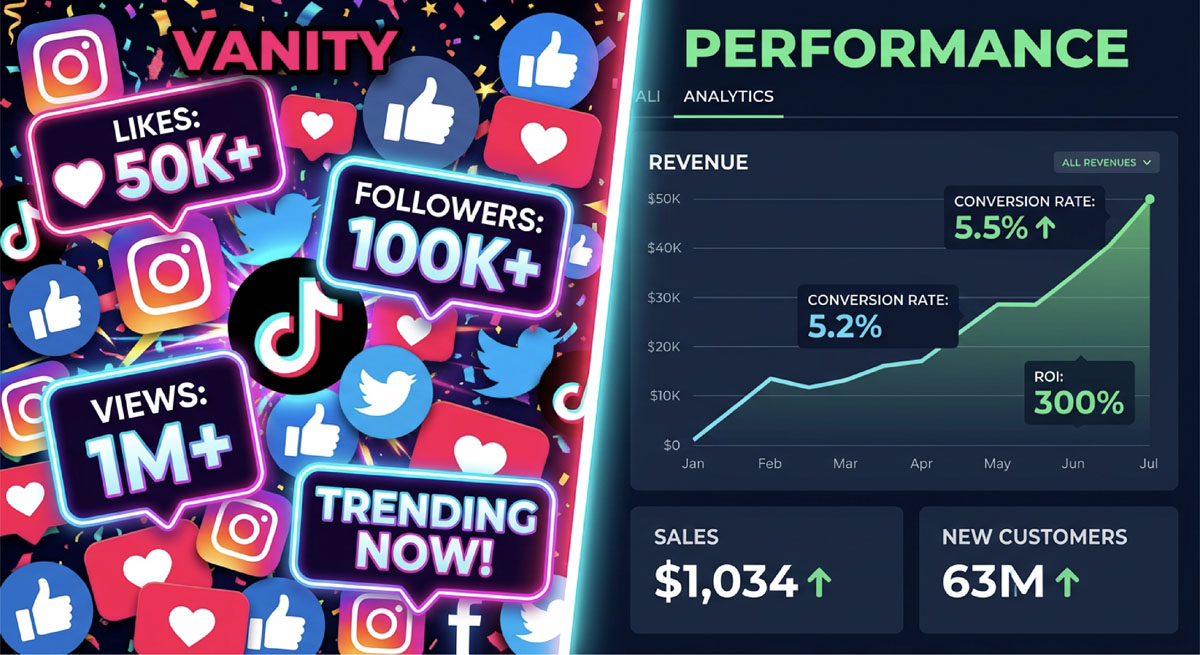
One of the clearest indicators of ego-driven marketing is an obsession with vanity metrics.
Vanity Metrics
These numbers may look impressive but often have little direct impact on revenue.
Examples include:
- Social media follower counts
- Post impressions
- Event attendance
- Press mentions
- Podcast appearances
These metrics can be useful signals of brand awareness, but they rarely tell you whether your marketing is actually producing customers.
Performance Metrics
Performance metrics are the indicators that tie directly to business growth and revenue. These include factors such as organic search traffic, conversion rate, cost per acquisition, customer lifetime value, returning customer rate, and revenue attribution by channel.
Unlike vanity metrics, these data points show how effectively marketing efforts are turning attention into actual customers and sales. A strong marketing strategy prioritizes these metrics first, using them to guide decisions, allocate budget, and measure real impact on the business.
The Foundation: Performance Marketing Channels
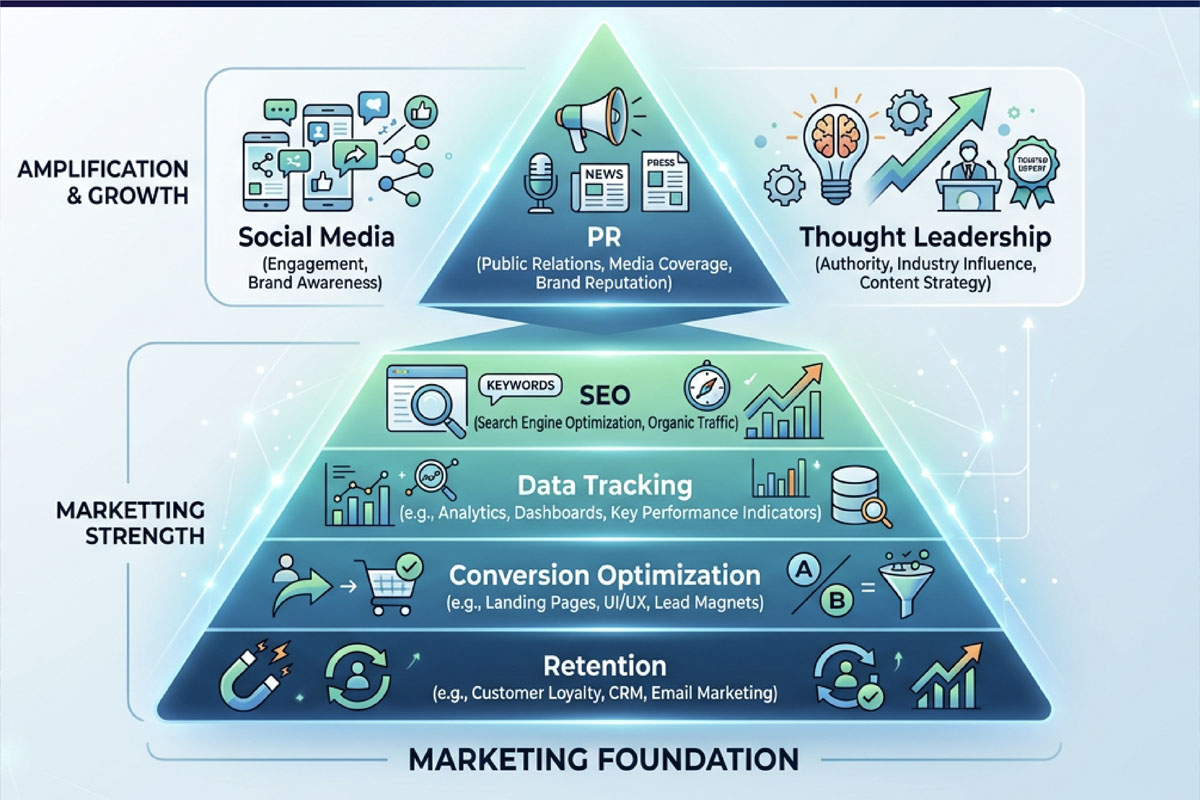
Before investing heavily in brand visibility, cannabis businesses should ensure that their performance foundation is solid.
This foundation typically includes:
-
SEO
Organic search remains one of the highest ROI channels in cannabis marketing. When executed properly, SEO drives consistent, high-intent traffic from consumers actively looking for products or dispensaries.
-
Data Tracking & Attribution
Without reliable analytics, marketing decisions become guesswork. Proper GA4 implementation, conversion tracking, and attribution modeling ensure that teams understand which channels actually drive revenue.
-
Conversion Optimization
Traffic alone doesn’t grow a business. Optimizing landing pages, product pages, and checkout flows improves how efficiently visitors become customers.
-
Customer Retention
Repeat customers are often the most profitable segment. Email marketing, loyalty programs, and CRM systems help maximize lifetime value.
Once these systems are working together, marketing decisions become grounded in real performance data.
Listening to Customers Instead of Chasing Trends
Another hallmark of ego-driven marketing is chasing what feels “hot” instead of listening to customers. Cannabis brands sometimes pivot their strategy based on trends like:
- A new social media platform
- A viral marketing format
- Competitor campaigns
- Industry buzzwords
But the most valuable insights often come from simpler sources:
- What customers are searching for
- Which products they repeatedly buy
- Which content they engage with
- What questions they ask your team
When brands align marketing decisions with customer behavior instead of internal assumptions, performance improves dramatically.
When Ego-Driven Marketing Does Make Sense
Ego-driven marketing activities are not always bad. Thought leadership, social media, events, and PR can help build brand awareness and credibility. The key is timing and balance.
These efforts work best when they sit on top of a strong marketing foundation. That foundation should already show clear ROI, with channels that are measurable and trackable. When those systems produce steady results, visibility efforts can help amplify growth.
Without that foundation, however, they often become distractions that consume time and budget without delivering meaningful impact.
The Most Successful Cannabis Brands Follow the Data
The cannabis industry is still evolving, and marketing budgets are often limited. That makes it even more important to prioritize strategies that produce measurable outcomes.
Brands that outperform competitors tend to share a few traits:
- They invest in long-term channels like SEO
- They track performance data closely
- They optimize conversion and retention
- They listen to customer behavior
- They avoid chasing every marketing trend
Most importantly, they make decisions based on what the data proves works, not what feels exciting in the moment.
Client Success & Case Studies
Real-world client results often demonstrate the value of integrated marketing strategies built around branding, SEO, and retention systems.
-
Newport Cannabis Co. (RI)
Our client Newport Cannabis Co. is a strong example of what happens when a company fully commits to a data-driven strategy. From the beginning, the Newport team trusted Puf’s recommendations and prioritized foundational marketing systems.
Despite operating on a tight timeline, the project focused on high-impact channels including branding, website infrastructure, SEO, PPC, retention marketing, and local PR. Social media was handled internally, which allowed us to focus on the channels most closely tied to measurable revenue.
The results speak for themselves: Newport Cannabis Co. has experienced approximately 3 to 3.5 times year-over-year sales growth compared to the previous dispensary operation at the same location.
-
Lazy River Products (MA)
Long-term partnerships also play an important role in sustained marketing success. One example is Lazy River Products, a client relationship that has continued for more than seven years. As the brand has grown, the scope of work has expanded as well, allowing our team to continually refine the marketing roadmap and adapt strategies to emerging opportunities in SEO, AI-driven search, and digital customer engagement.
These types of partnerships demonstrate how sustainable growth often comes from consistent strategy, trust, and adapting to changing digital trends rather than constantly chasing new tactics.
Want to Know What’s Actually Driving Your Revenue?
Ego-driven marketing can quietly drain resources from otherwise strong cannabis businesses. When teams focus on visibility over performance, they often ignore the channels already driving real revenue. The better approach is to build a strong performance foundation first.
Once SEO, analytics, and customer retention systems show clear ROI, then social media, PR, and thought leadership can help amplify growth. At PufCreativ, we help cannabis brands and dispensaries focus on the channels that truly move the needle (from SEO and analytics to conversion optimization and retention strategy).
If you’re unsure whether your marketing strategy is driven by performance or perception, we’d be happy to take a look.