The global cannabis industry is beginning to take shape in a more structured, organized way. Nowhere is that more evident than in Europe, where markets are developing with an institutional mindset rather than a purely commercial one. In these environments, traditional growth tactics carry less weight. Instead, success is increasingly driven by strong branding, owned channels, and direct relationships with consumers.
Operators who invest early in SEO, retention, and community are setting themselves up with a clear advantage. At the pace things are moving, global normalization feels closer than ever (likely within the next three to six years).
That shift was immediately noticeable on this year’s trip.
Last year, it felt like global cannabis was on the horizon. This year, it felt like it had already arrived.
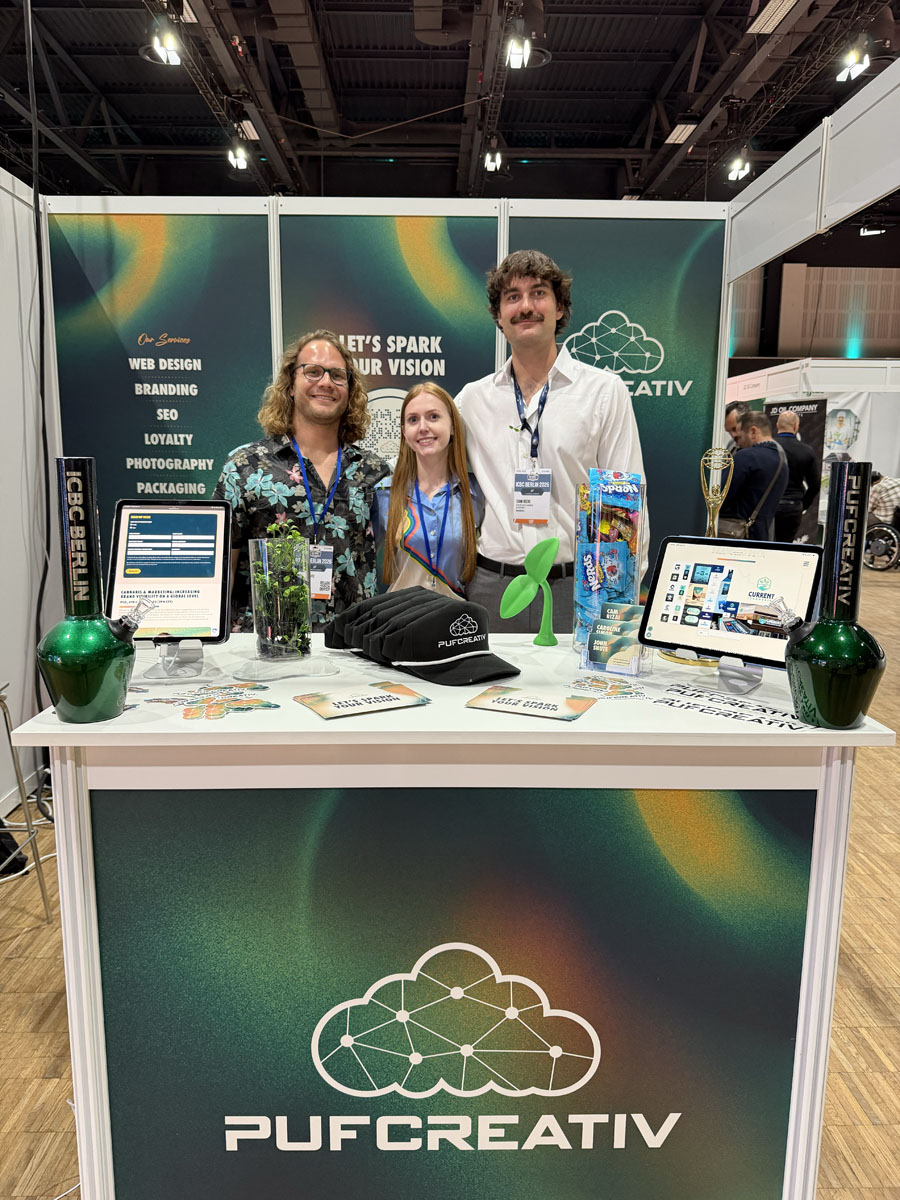
The difference was clear from the start. I wasn’t traveling alone this time: Caroline Simon and Cameron Rizai from our team joined me, and the entire experience carried more intention. We weren’t attending ICBC Berlin as observers; we were showing up with a defined role in the global conversation. We had a booth, we had partners to connect with, and we had a much clearer understanding of where we fit within the industry.
The trip itself moved fast. We left Colorado Saturday night, landed in Munich Sunday morning, and caught a connecting flight into Berlin shortly after. From there, it was straight into the rhythm of the week. We made a quick stop at Loveburgers (the same vegan spot we visited last year) before heading into two back-to-back happy hours.
There was no slow start, the pace picked up immediately and never let up. That momentum ended up defining the entire trip.
A More Connected Global Cannabis Network
We linked up with Tim Euler from Cannabis Gold Social Club and rode over with Jeff and Bill Levers from Beard Bros Media to the Cannabis Chamber of Commerce happy hour. From the start, it felt like we were picking up right where things left off last year, just with more momentum behind it.
The energy was different. Conversations moved faster, connections felt more intentional, and there was a clear overlap between operators from completely different markets who were now either working together or thinking about growth in similar ways.
We caught up with familiar faces like Ian Rassman, Sara Payan, Jeff Pearson, and Rachel Wright from Verdant Strategies, and also connected with new groups like Linneaus Partners before heading over to the Global Cannabis Network Collective happy hour.
GCNC was packed, but it never felt chaotic. It was one of the most active rooms of the night, but also one of the most focused. Everyone there seemed to have a purpose.
Throughout the night, I ran into Jillian Redish, Jeane Sullivan from New Holland Group, Luc Richner from Cannaviga, Heidi Whitman from EmpowerHer, Lance Grove from Grove Bags, and a steady stream of operators, investors, and marketers who are all actively shaping where the industry is going.
The biggest takeaway from that first night was the density. People from the U.S., Canada, Germany, Spain, and beyond were all in the same rooms, having the same conversations, and starting to build together. That level of connection just felt more real and more developed than it did last year.
Tallman House and the Institutional Shift
The next morning brought Tallman House at Hotel Adlon, and honestly, it delivered.
This was the session I’d been looking forward to. The room had real weight to it. Operators, investors, and leaders who weren’t there to perform. They came to talk, and the conversations reflected that. Not polished talking points, but actual discussions about structure, capital, and where global expansion is heading.
Jamie Pearson from New Holland Group opened with something that’s been rattling around in my head ever since.
The U.S. and Canada are commercial markets. The rest of the world is institutional.
Simple distinction. Massive implications. In commercial markets, you’re fighting for brand, price, and shelf space. In institutional markets, you’re learning a completely different language. Regulatory frameworks, credibility building, aligning with systems that are still being invented. Same industry, different game entirely.
Rachel Wright picked up a similar thread on her panel, focused on compliance, finance, and operational structure. What struck me was how fast that side of the business is moving. The operators who get this, who treat structure as a competitive advantage rather than a checkbox, are going to have a real edge. The ones who don’t will feel it.
Then came the panel on the Organigram and Sanity Group acquisition, moderated by Alex Rogers from ICBC. Hearing directly from the people inside that deal changed how I was thinking about the market.
Consolidation has started. Not coming. Started.
That’s the thing that stayed with me walking out of Tallman House. Price compression is real and it’s hitting across markets. But momentum is accelerating at the same time, and both of those things are true right now, together.
If this pace holds, we’re not talking about some distant future where cannabis goes fully global. We’re talking three to six years.
Cannabis Marketing in Europe Requires a Different Approach
A lot of people still talk about regulation as a limitation. It isn’t. It’s a constraint that forces better marketing.
Operators across Germany and Europe are working within strict compliance frameworks. Advertising is limited. Messaging is restricted. In many cases, you can’t rely on the same channels that drove growth in the U.S.
But that doesn’t remove marketing. It changes it. Regulation limits channels, not strategy. The brands that win in these markets will be the ones that figure out how to build within those constraints. Strong branding, clear positioning, and owned channels stop being nice to have and start being the whole game.
This is where SEO, email marketing, and community engagement start to matter at a completely different level. And right now, most brands aren’t there yet. That’s the gap.
From Attending to Building at ICBC Berlin
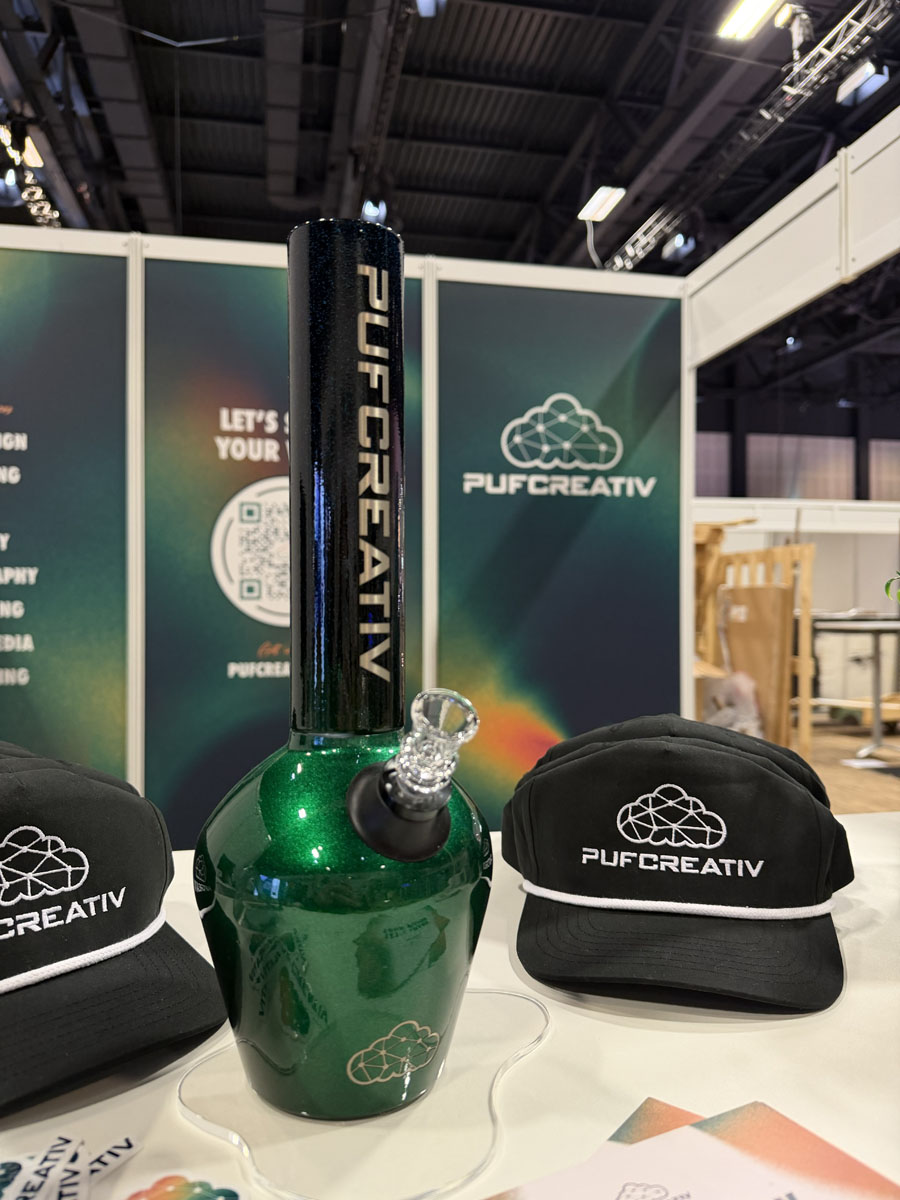
This year, we had a booth, and that shifted everything.
This time, we were part of the ecosystem. We ran a giveaway each day, reconnected with existing clients, strengthened partnerships, and met a steady stream of new operators building across different regions. It felt different being present in that way, and the conversations reflected it.
What stood out most was the level of execution happening internationally.
Dayron Escobar is doing serious work in Colombia with 3Chomes, building real infrastructure in an emerging market. Pablo Cortes is scaling across Spain and Portugal with Agropharma, navigating multiple regulatory environments at once. These aren’t early-stage ideas anymore. These are real businesses expanding across borders and figuring things out in real time. It also reinforced something I’ve been thinking about more and more.
The work we’re doing at PufCreativ around branding, SEO, and customer retention isn’t just relevant in the U.S. It’s going to be critical globally over the next five to ten years, especially as more markets open and competition tightens.
Later that night, I linked up with Shabaaz from Blaze, one of the leading POS platforms in cannabis, and we made our way to Tribe.
Another reminder that these markets operate differently. Not just from a regulatory standpoint, but culturally too. You don’t fully understand that until you’re on the ground, and it matters more than most people give it credit for.
Building Brands Without Traditional Marketing Channels
I had the opportunity to speak on a panel moderated by Brian Applegarth, alongside Elizaveta Zharikova, Jack Hill, Simón Pablo Espinosa, and Dustin Hoxworth. The focus was simple but important. How do you build a brand in a market where most traditional marketing channels don’t exist?
The conversation broke down into a few core ideas. Constraint is a design condition. When paid media and traditional distribution are off the table, you’re forced to be intentional. That pressure, when handled well, produces stronger brands.
The shift from product to community is real. Growth comes from connection, trust, and consistency over time. Visibility alone doesn’t move the needle the way it used to. And the practical side matters. A lot of the tactics that actually work right now are straightforward. Consistent content, local presence, direct engagement, building real relationships with your audience. Nothing groundbreaking, but most brands still aren’t doing it well.
The brands breaking through are building something that fits the environment they’re actually in.
The Biggest Gap in Cannabis Right Now
This was probably the clearest takeaway from the entire trip. Most operators in Europe are locked in on compliance and getting their businesses running. That makes sense. But fewer are thinking about how customers will find them, how they’ll hold onto those customers once they arrive, and how they’ll build relationships that actually last.
Advertising is limited, and that reality isn’t shifting anytime soon. What remains are owned channels. Search visibility. Email and SMS marketing. Community engagement. If your business isn’t showing up on Google or AI search, you don’t exist. If you’re losing customers after the first visit, you’re rebuilding from scratch every single month. If you have no real connection to your community, someone else will step in and take your place.
The window to build this foundation is open right now. It won’t stay that way.
Where the Global Cannabis Industry Is Headed
The global cannabis industry is organizing.
Markets are moving at different speeds, but they’re connecting. Operators are learning from each other, partnerships are crossing borders, and capital is moving with more intention behind it. Industry research from New Frontier Data backs this up.
The companies that take branding, digital infrastructure, and retention seriously right now are building a position that will be very hard to compete with in a few years. The ones that don’t will be catching up to someone who got there first.
Travel Reality
After the panel, we grabbed dinner with Dustin, Marianna from Alibi, the Beard Bros team, Jeremy Ortiz from Brown and Brown, Adam Windish from British Cannabis, Tim from Cannabis Gold, and a few others. Good food, good people, the kind of conversation that keeps going longer than anyone planned.
A few hours of sleep. Airport by 4am. Flight canceled.
We rerouted through London, grabbed a cab across the city to Heathrow, and eventually found our way back to Colorado. Twenty-six hours of travel in total. Not ideal. But that’s part of it.
PufCreativ at ICBC 2026: Final Thoughts
If you’re building in cannabis right now, this is the window. Markets are still forming. Playbooks aren’t fully written. The leaders aren’t fully defined. That’s exactly what makes this moment worth paying attention to.
But the direction is clear. Brand matters. Owned channels matter. Real connection matters.
At PufCreativ, we came back from Berlin more convinced of that than ever. The companies that understand this now are the ones that will define what this industry looks like next. Interested? Contact us and let’s get started today!