
Crossing a U.S. Border: Practical Advice for Immigrant Travelers
We started our RAICES fundraiser to expand access to legal support for immigrant, refugee, and asylum-seeking families. The more we learned, the clearer it became that knowing what to expect before crossing the U.S. border is one of the most valuable resources people can have.
One moment where many families feel most exposed is the border itself. A routine trip home, a visit to relatives, or a return from a work conference can turn stressful fast. So we sat down with an immigration attorney to ask a simple question: what should immigrant travelers actually know before crossing a U.S. border? Their answers were practical and honest about the limits of preparation.
Honesty is your strongest asset
Don’t lie to border officers. Right now, border officers are heavily focused on credibility. A misstatement, even a small one, can do more damage to your case than the truth you were trying to hide.
That applies to cannabis too, which matters to a lot of people in our industry. Cannabis is still federally controlled, and state legalization doesn’t change how border officers see it. If you consume, whether that’s smoking, vapes, or edibles, and you’re asked about it, honesty is the safer path. Neither answer is risk-free, though. Admitting use, even legal use, can make a noncitizen inadmissible, and lying to an officer counts as misrepresentation, which can become a permanent bar. CBP has also said that a traveler coming to the U.S. for reasons tied to the cannabis industry may be refused entry. Because the stakes can be serious for noncitizens, it’s worth talking through your history with an immigration attorney before you travel.
Honest doesn’t mean chatty, though. Answer the question you’re asked, then stop. People who ramble or offer extra details tend to share things they never meant to, and every extra sentence opens another line of questioning.
Keep your paperwork close
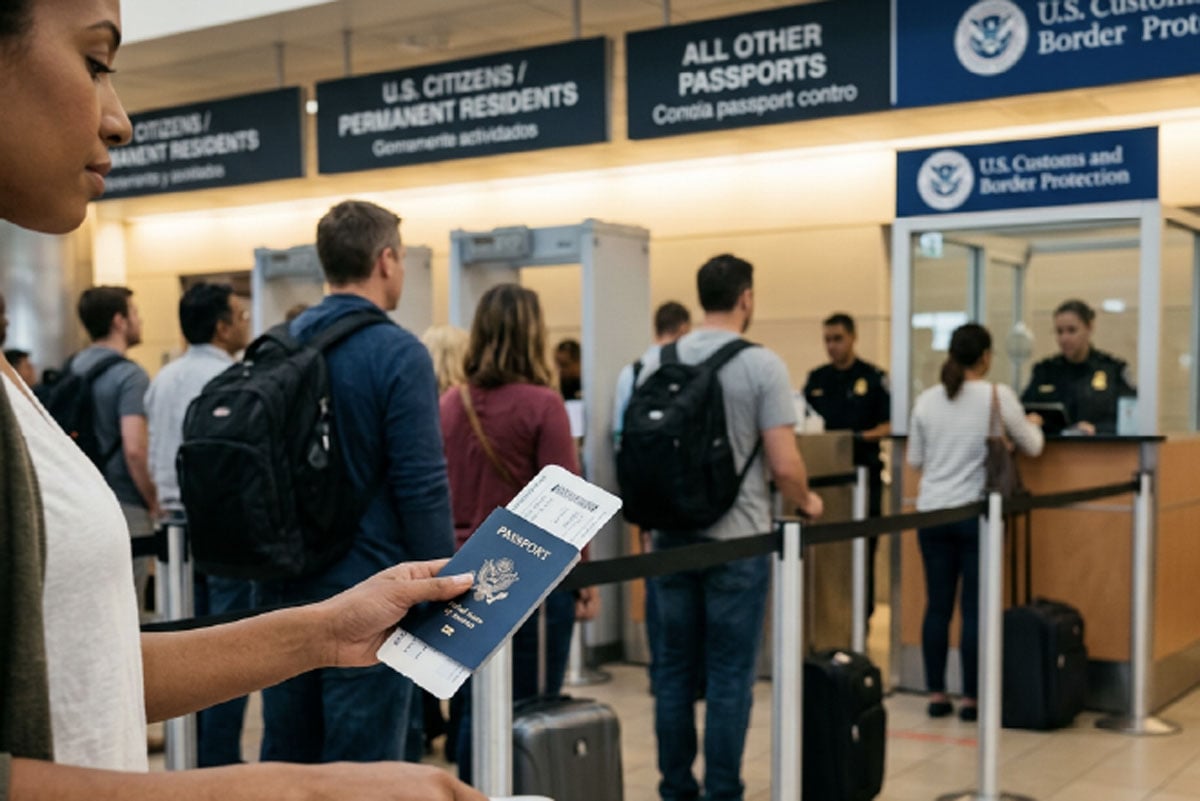
The basics sound obvious, but they’re easy to let slip when you’re juggling bags and boarding passes. Keep your passport on you the entire trip, not packed in a suitcase. The same goes for your visa or any other travel documents. Bring a printed copy of your itinerary, because a dead phone battery is not a conversation you want to have at a checkpoint.
If you have an immigration attorney, there’s one more document worth carrying: Form G-28, the Notice of Entry of Appearance as Attorney or Accredited Representative. It’s the official record that a lawyer represents you. Should you be pulled aside or detained, that form shows there’s an attorney on file and that you have someone in your corner. It’s a few pages of paper that can change how quickly help arrives.
Know your rights, and carry them
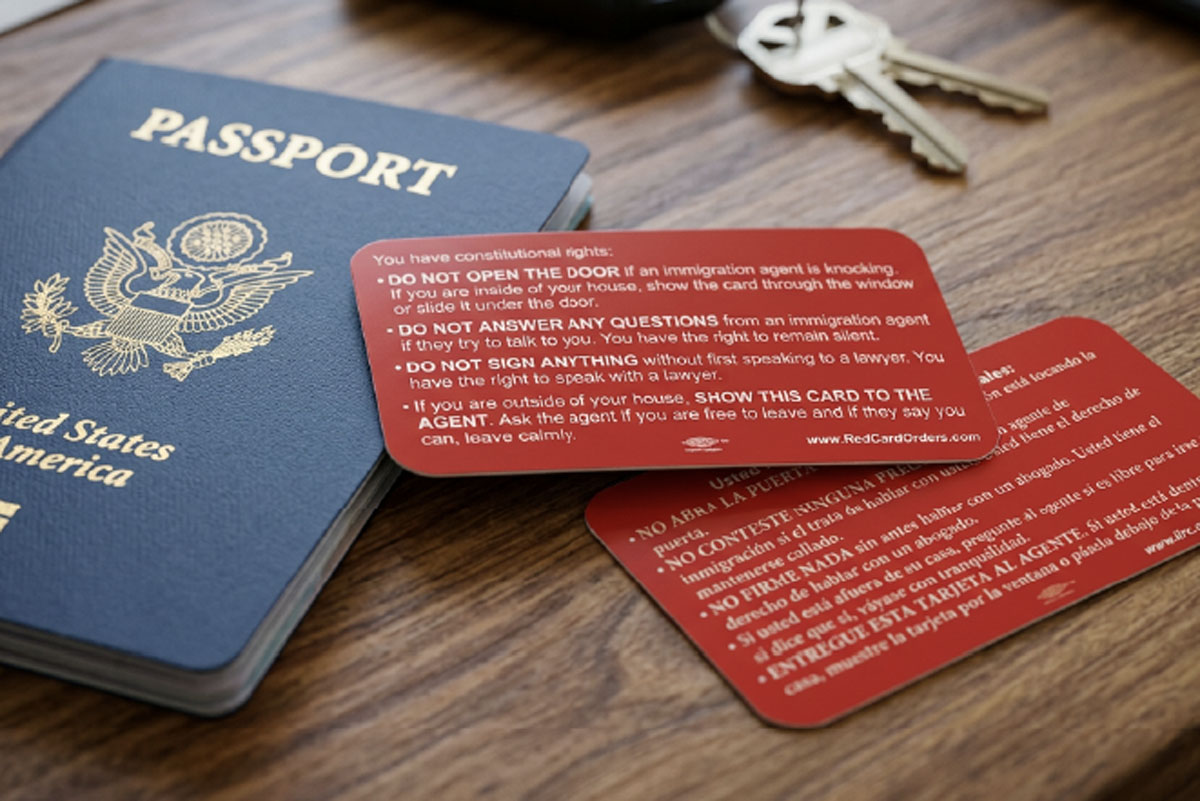
“Know Your Rights” red cards are small, wallet-sized reminders of your basic constitutional protections, available in nearly 60 languages. They state that you don’t have to speak with an officer and that you can ask for an attorney.
Keep one on you at all times. If you’re stopped by ICE or another officer, you can hand over the card and stay silent instead of trying to find the right words under pressure. They’re especially useful for encounters inside the country, away from a port of entry, where questioning rules differ. At the border itself, CBP inspection works differently: if you hold a visa or are visiting, refusing to answer an officer’s questions can get you refused entry.
Some officers read the card and let people go. Others don’t care at all. There’s no guarantee, but the card costs nothing to carry and can help you stay steady.
The parts preparation can’t fix
Some travelers face restrictions before they ever reach an officer. The current U.S. travel ban, in effect since January 1, 2026, applies by nationality, not birthplace. It has two lists: a full ban on 19 countries plus Palestinian Authority travel documents, and a partial ban on 20 more that blocks immigrant visas and most visitor, student, and exchange visas. Green card holders are exempt, and so are dual nationals traveling on a passport from a country that isn’t listed. The lists are reviewed every 180 days, so if you’re a national of an affected country, check your status with an attorney well before you book.
Then there’s the part no checklist can solve. Bias is real at the border, and racial profiling shapes who gets pulled aside and how they’re treated. Officers have wide discretion, and even a traveler who did everything right can have a bad outcome. The system is unpredictable and often unfair. Preparation improves your odds, but it doesn’t promise anything.
Look for the helpers
Near the end of our conversation, the attorney shared a quote they’ve leaned on when morale was low. It comes from Fred Rogers:
“When I was a boy and I would see scary things in the news, my mother would say to me, ‘Look for the helpers. You will always find people who are helping.'”
It’s a gentle line, but it holds two truths at once. The system is broken and scary, and nobody should pretend otherwise. There are also people showing up every day to make it a little less so. You can’t control a biased officer or an unfair policy. You can control where your energy goes: teaching people their rights, handing them practical tools, connecting them with attorneys and advocates, and backing the nonprofits and legal teams that take on the toughest cases.
This campaign is our way of being one of those helpers, and we’re lucky to have incredible partners alongside us. Our friends at EduCannabis recently posted a video on Instagram encouraging their community to support the fundraiser. En Volá, a Chile-based cannabis media platform with a large community across Latin America, has also been creating content on their website to help the campaign reach even more people. Each of them chose to use their platform for families who need it, and every person who shares this guidance joins that effort.
No single group can fix the system, but working together means fewer families have to face it alone.
Be one of the helpers. Donate to our RAICES fundraiser and share this piece with your community so more families can get the support they deserve.
If you need legal support, RAICES offers free and low-cost immigration services, and the National Immigration Legal Services Directory can help you find a nonprofit legal provider near you.
This article is for general information and isn’t legal advice. Every situation is different, so please speak with a qualified immigration attorney before you travel.
