
Capital is drying up in the cannabis industry, and operators are feeling the squeeze. With investors more selective and lenders still hesitant, cultivation facility owners face a tough truth: their multi-million-dollar assets often struggle to prove real value to buyers or financiers.
The issue goes deeper than market conditions. It’s a gap in how facilities are evaluated and marketed compared to nearly every other asset class. That’s why cannabis cultivation needs its own CarFax moment.
The Valuation Problem Cannabis Can’t Afford to Ignore
When selling a used car, people pull a CarFax report; when selling a home, they order an inspection.
However, when cannabis operators try to sell cultivation facilities (assets that can cost millions to build and generate substantial revenue) they’re essentially asking buyers to take their word for it. This results in deals that fall through, financing terms that heavily favor lenders, or asking prices based on gut feelings rather than objective data. In an industry where operational efficiency can make or break profitability, this knowledge gap creates real financial consequences.
Most cannabis cultivation facilities were built during the early rush of legalization. They went up quickly and cheaply, often without the long-term performance optimization that more mature industries take for granted.
Therefore, operators often spend countless hours troubleshooting environmental controls. They battle inefficient lighting systems and manage water and waste problems they’ve simply adapted to over time. These inefficiencies disrupt daily operations and cut deeply into asset valuations.
Without standardized evaluation methods, sellers struggle to communicate their facility’s true capacity, and buyers remain skeptical about revenue projections.
5 Key Components of Comprehensive Technical Due Diligence
Smart players in the cannabis industry are finally beginning to recognize that cultivation facilities need the same level of technical evaluation that other industrial assets receive. This emerging approach goes far beyond traditional real estate assessments to examine the specialized systems that drive cannabis production.
Comprehensive technical due diligence for cultivation facilities should evaluate:
1. Infrastructure & Systems Analysis
Power distribution, environmental controls, lighting efficiency, and water management systems all directly impact production capacity and operating costs. A thorough evaluation reveals not only what’s installed, but also how effectively these systems perform compared to industry standards.
2. Production Capacity Validation
Rather than relying on past production numbers or even theoretical square footage calculations, proper due diligence measures actual growing capacity based on existing infrastructure, workflow design, and environmental limitations. This creates realistic revenue projections based on operational reality.
3. Cost Structure Assessment
Understanding the true cost of goods sold (COGS) requires analyzing resource efficiency, energy consumption patterns, labor requirements, and waste management costs. Many operators underestimate how much their inefficiencies cut into the bottom line.
4. Risk & Opportunity Identification
From compliance vulnerabilities to equipment that’s approaching end-of-life, comprehensive evaluation identifies both immediate risks and strategic improvement opportunities. This includes assessing sustainability practices, regulatory compliance status, and integration capabilities with other facilities.
5. Return on Investment Roadmap
The most valuable technical assessments not only identify problems but also prioritize solutions by potential ROI. This gives owners a strategic framework for improvements that will have the greatest impact on asset value.
The Market Impact of Enhanced Asset Intelligence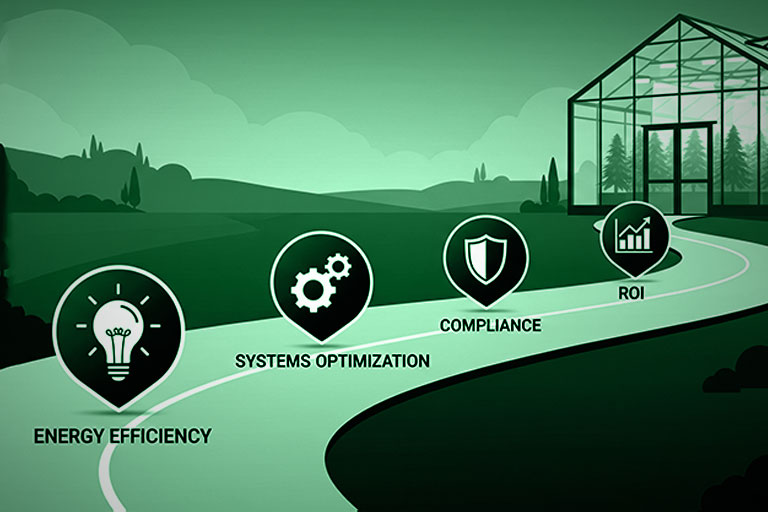
Early adopters of comprehensive technical due diligence are seeing clear benefits across the M&A process. Sellers who present objective, third-party validated data secure better terms and close deals faster. Buyers gain confidence in their acquisitions, while lenders offer more favorable financing when they can trust the numbers.
This shift toward data-driven asset evaluation is creating a more mature marketplace:
- Deals once fueled by relationships and gut instinct are now backed by performance metrics and validated projections.
- Facilities that prove superior efficiency through comprehensive evaluation are establishing themselves as premium assets.
Meanwhile, operators who can identify and address inefficiencies before going to market are positioning themselves for significantly better valuations.
Show, Don’t Tell: Winning with Transparency
Savvy cultivation facility owners are starting to think like sellers in other mature industries. Just as homeowners renovate before listing their properties, cultivation operators are discovering the value of identifying and addressing operational inefficiencies well before they enter the market. Understanding which improvements will deliver the highest return on investment is crucial.
A comprehensive technical evaluation provides this roadmap, ranking potential upgrades by their impact on production capacity, operational efficiency, and compliance status. This proactive approach serves multiple purposes: it optimizes ongoing operations, reduces regulatory risk, and creates documentation that demonstrates the facility’s value to potential buyers or lenders.
The outcome is often a significant increase in asking price that far exceeds the cost of both the evaluation and recommended improvements.
The Path Forward: Defining the New Standard
This shift is inevitable. The cannabis industry is maturing rapidly, and asset evaluation practices are evolving to match. Cultivation facility owners who embrace comprehensive technical due diligence position themselves ahead of a market trend that’s becoming increasingly important to investors, lenders, and buyers. As capital tightens and competition intensifies, facilities that prove their value with objective, professionally validated data gain a decisive edge.
Operators ready to unlock their facility’s true potential now have access to comprehensive technical due diligence services like CannaDiligence. These services are establishing the objective evaluation standards the industry has long lacked. At just $1–2 per square foot, assessments often pay for themselves within weeks through operational improvements, well before any equipment upgrades take place.
As you can see, the cannabis industry’s CarFax moment is here. Don’t get left behind—it’s time to show what your facility is truly worth!
**This guest blog was written by Sam Milton, founder of Climate Resources Group. Sam established the organization in 2017 to help the cannabis industry and other institutions capture the benefits of energy and sustainability planning. Through his cannabis-specific program, Enlighten Your Grow, Sam delivers energy efficiency incentive facilitation services, energy compliance support, and strategic sustainability support to cannabis operators across North America.