
In cannabis, your menu is your business. It’s where customers price-shop, compare terp profiles, browse inventory, and ultimately decide whether to check out. That means the way your menu is built isn’t just a technical choice—it directly impacts your SEO, visibility, conversions, and long-term ability to scale.
Today, most dispensaries fall into one of two camps:
- Native e-commerce menus (almost always implemented via a reverse proxy)
- Embedded or iFrame-style menus
On the surface, they can look similar. Under the hood, the difference is massive.
This guide breaks down what actually matters so you can choose the right setup for growth.
 What These Menu Types Actually Are
Native E-Commerce Menus (Reverse Proxy)
A means your product data, images, descriptions, pricing, categories, filters, and cart all live on your website and under your domain. In cannabis, this is typically achieved through a reverse proxy, which allows third-party menu data to render as first-party content.
Native menus create:
- Indexable product pages
- Unique URLs for products, categories, and filters
- Metadata, alt text, and structured content under your domain
Native =
- Your domain
- Your content
- Your SEO value
This structure gives you real technical control and full visibility into user behavior, from product discovery through checkout.
Embedded / iFrame Menus
Embedded menus (often delivered via iFrames) place a third-party menu inside your site without actually living on it.
To users, the menu appears functional. To search engines, it’s invisible.
Embedded =
- Third-party content
- No indexable product pages
- No SEO equity
Your products don’t exist in your sitemap, your metadata is locked, and your content contributes nothing to organic visibility.
Native Menus vs. Embedded Menus: A Side-by-Side Breakdown
SEO & Indexability
Native Menus
- Fully indexable product and category pages
- Unique URLs and metadata under your domain
- Builds topical authority and keyword depth over time
Embedded Menus
- Content not crawlable or indexable
- No metadata control
- Zero long-term SEO value
Winner: Native
Speed & Performance
Native Menus
- Optimized load times when built correctly
- Full control over caching, assets, and performance
Embedded Menus
- Performance limited by third-party scripts
- Slower load times and rendering delays
Winner: Native
Speed impacts both rankings and conversions.
 User Experience (UX)
Native Menus
- Seamless design across site, menu, and checkout
- Custom filters, categories, bundles, promotions, and upsells
- Clean loyalty and CRM integration
Embedded Menus
- Disconnected UI
- Limited customization
- Friction-heavy customer journeys
Winner: Native
UX drives retention.
Data Ownership & Analytics
Native Menus
- Full access to analytics and event tracking
- Product-level behavior insights
- Ownership of customer journey data
Embedded Menus
- Limited or gated analytics
- No true product-level insights
- Data owned by the provider
Winner: Native
Data you don’t own can’t be optimized.
Compliance & Control
Native Menus
- Immediate updates to compliance language
- Custom disclaimers, age gates, and state rules
- Flexible integrations with POS, CRM, and loyalty
Embedded Menus
- Platform-controlled compliance updates
- Slower response to regulatory changes
- Limited customization
Winner: Native
Compliance changes too fast to outsource fully.
Long-Term Scalability
Native Menus
- Supports multi-location and multi-state growth
- Adaptable site architecture
- Built for long-term SEO and expansion
Embedded Menus
- Locked into provider limitations
- Difficult to scale across markets
Winner: Native
Growth requires ownership.
Why Search Engines Treat These Approaches Differently
Google rewards original, crawlable, trustworthy content. Native menus deliver exactly that.
Because native menu content lives on your domain, Google can crawl it, index it, and assign ranking value. Product pages, categories, metadata, schema, and internal links all contribute to search visibility and authority.
Embedded menus only display third-party content. Google recognizes that the data originates elsewhere and treats those pages like dynamic widgets. They don’t build authority, don’t rank, and don’t compound over time.
Native menus build equity. Embedded menus do not.
Build for Equity, Not Just Convenience
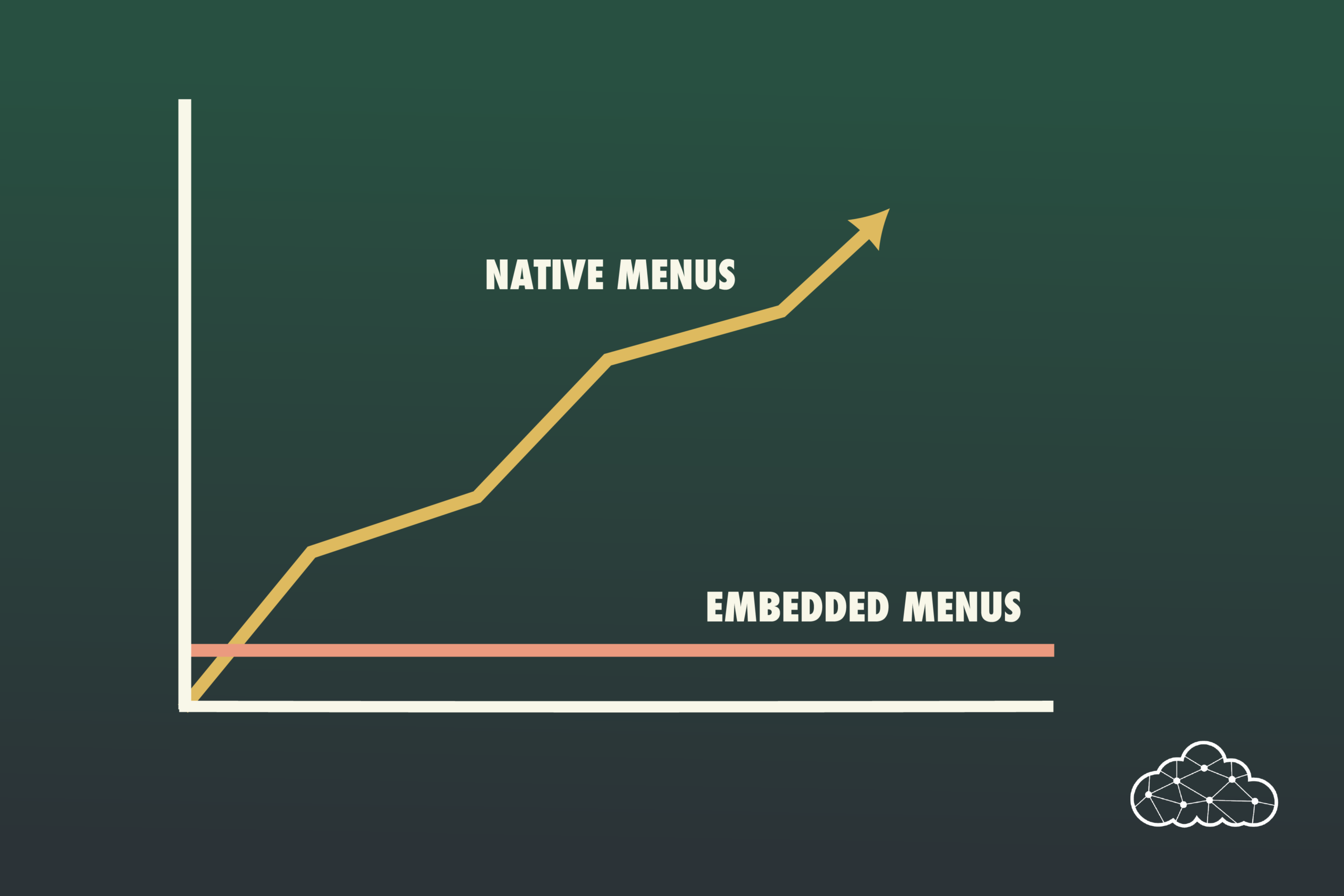
Native e-commerce menus build long-term SEO value. Embedded menus trade short-term convenience for long-term invisibility.
If growth, discoverability, and scalability matter, your menu architecture must work for your business behind the scenes.
Not sure where your current setup stands? A strategic architecture review can protect existing traffic, unlock missed opportunities, and align your menu with your business goals.
Wondering how your menu is helping—or hurting—your SEO? Reach out to PufCreativ, and we’ll make sure your site is built to rank, convert, and scale.
 Ben Stewart – Director of Web
You can always count on Ben Stewart to get the job done right, no matter the circumstances. He is the Director of Web at PufCreativ and the founder of both the web and SEO departments. With a background in graphic communications and computer science, Ben naturally gravitated toward web development and SEO early in his career. Over the years, he has helped build a rock-solid web team known for crafting websites that are as beautiful as they are bulletproof. While he has since passed the SEO torch to others, his deep knowledge continues to guide the work.
Ben’s proudest accomplishment is not just one site or project, but the collective quality and reliability of everything the team has produced. Based in Montana, Ben lives for fresh air, quiet mountains, and wild rivers. He spends his free time fly fishing, snowboarding, hunting, and adventuring with his wife two high-energy dogs, Charlie and Roo. He is equally at home writing code or rewiring a light fixture, bringing both precision and versatility to every part of his life and work.